AI Recruiting Workflow: Faster Hiring With Fair Guardrails

AI Hiring Magic: A Practical Playbook for Faster, Fairer Recruiting
Hiring teams can use artificial intelligence to speed up sourcing, improve job ads, standardize screening, and reduce repetitive admin—without losing human judgment. The strongest results come from treating AI like a reliability tool: it raises the baseline quality of writing, organization, and consistency across the hiring lifecycle, while humans stay accountable for decisions that affect people’s lives.
Below is a practical map of where AI helps most, how to set up a lightweight workflow, and what guardrails keep the process respectful, compliant, and auditable.
What AI can (and can’t) do in recruitment
AI shines when the work is text-heavy, repetitive, or requires organizing messy inputs. Think of it as an assistant for drafting, summarizing, structuring, pattern-finding, and workflow automation across recruiting steps. Used well, it reduces “blank page” friction, tightens consistency, and helps teams document decisions more clearly.
AI should not be the final authority on outcomes. Final selection, compensation decisions, sensitive conversations, and accountability for impact stay with humans. The practical mindset is simple: let AI raise baseline quality and consistency, then apply human review where the risk is highest.
A useful starting rule: automate low-risk text work first (job ad clarity, outreach variants, candidate summary formatting), and keep high-impact decisions transparent and reviewable.
Set up a simple AI recruiting workflow
A workable AI workflow doesn’t require a total process overhaul. It starts with clear inputs, clear boundaries, and a few approval checkpoints.
1) Define the role in plain language
Before any job post or sourcing begins, capture outcomes (what success looks like), must-have skills, nice-to-haves, and deal-breakers. Writing this in everyday language makes it easier to test whether a requirement is real—or just inherited from an old template.
2) Choose a system boundary (what data is allowed)
Decide what can be shared with AI tools (public info, candidate-provided resumes, sanitized internal notes) and what is prohibited (sensitive personal data unless legally required and properly handled). Keep data minimized: only share what the task needs.
3) Create a repeatable folder structure
One clean structure keeps outputs traceable: role brief, job ad, screening rubric, interview kit, candidate summaries, and offer packet. When questions arise later, you can show what criteria existed at the time and how they were applied.
4) Decide review checkpoints
Pick the “human must approve” points: typically the job post, the screening rubric, interview questions/scorecards, and the final decision brief. This keeps velocity without sacrificing control.
| Stage | AI helps with | Human check |
|---|---|---|
| Role kickoff | Turn messy notes into a role brief and success metrics | Confirm requirements and remove unrealistic criteria |
| Job post | Draft and tailor job descriptions for clarity and inclusivity | Verify accuracy, tone, and legal language |
| Sourcing | Generate Boolean strings and outreach variations | Ensure messaging matches employer brand and role reality |
| Screening | Summarize resumes and map evidence to a rubric | Validate against the resume; watch for hallucinations |
| Interviews | Create structured questions and scorecards aligned to competencies | Ensure consistency and avoid inappropriate questions |
| Selection | Compile panel notes into a decision brief | Make the decision; document rationale |
| Candidate comms | Draft personalized updates and rejections | Confirm empathy, clarity, and timing |
Write clearer, more inclusive job descriptions
Better job posts reduce screening load by attracting qualified candidates while setting accurate expectations. A strong AI-assisted job description process starts from outcomes: list 3–6 measurable results for the first 90 days. Then separate essentials from preferences to widen the qualified pool without lowering standards.
Ask for an “acronym and jargon cleanup” pass so requirements are scannable to outsiders. Add transparency where possible: location expectations, flexibility, and salary range where applicable, plus a short overview of the hiring process (steps and approximate timeline). Finally, run an inclusivity pass to flag gender-coded terms, unnecessary degree requirements, and inflated years-of-experience asks that don’t match the actual complexity of the work.
Sourcing and outreach that feels human
AI can speed the most time-consuming part of sourcing: building targeted searches and writing first drafts of outreach—without turning messages into copy-paste spam.
Screening with structure: rubrics, summaries, and consistency
Interview kits that reduce bias and improve signal
Automation wins: admin tasks worth delegating
Risk, privacy, and compliance guardrails
For defensibility, keep records: role rubrics, interview scorecards, and decision notes. Helpful references include the U.S. Equal Employment Opportunity Commission (EEOC), the NIST AI Risk Management Framework (AI RMF 1.0), and the OECD AI Principles.
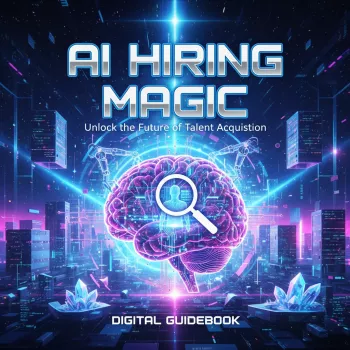
Put it into practice with AI Hiring Magic (digital download)
For a repeatable, role-by-role rollout, the AI Hiring Magic digital download eBook is built for HR teams, recruiters, and business owners who want practical, stepwise adoption. It’s especially useful for standardizing screening, improving candidate communication, and reducing time spent on repetitive tasks.
For teams also building healthier work habits during high-volume hiring seasons, the AI Sleep Smarts Checklist can be a lightweight companion for better rest and recovery when calendars get packed.
FAQ
Is AI hiring allowed, and what rules should be considered?
AI can be used in hiring, but requirements vary by location and industry. Focus on transparency, data privacy, documentation, and alignment with employment and data protection laws, and involve HR/legal review before scaling.
How can AI reduce bias instead of increasing it?
Use AI to enforce structure: consistent rubrics, standardized interview kits, and language checks—then apply human review for high-impact steps. Avoid treating automated ranking as the decision, and periodically audit outcomes for inconsistencies.
What’s the fastest way to start using AI in recruiting without disrupting the process?
Start with low-risk tasks like job ad clarity edits, outreach variants, and standardized candidate summaries. Add one approval checkpoint for anything candidate-facing, measure time saved, and expand only after the workflow proves stable.




Leave a comment